BatProtect is a 6-year funded ERC synergy grant (1st June 2024 – 31st May 2030) for nearly €12m led by a consortium of experts.
BatProtect’s Goal
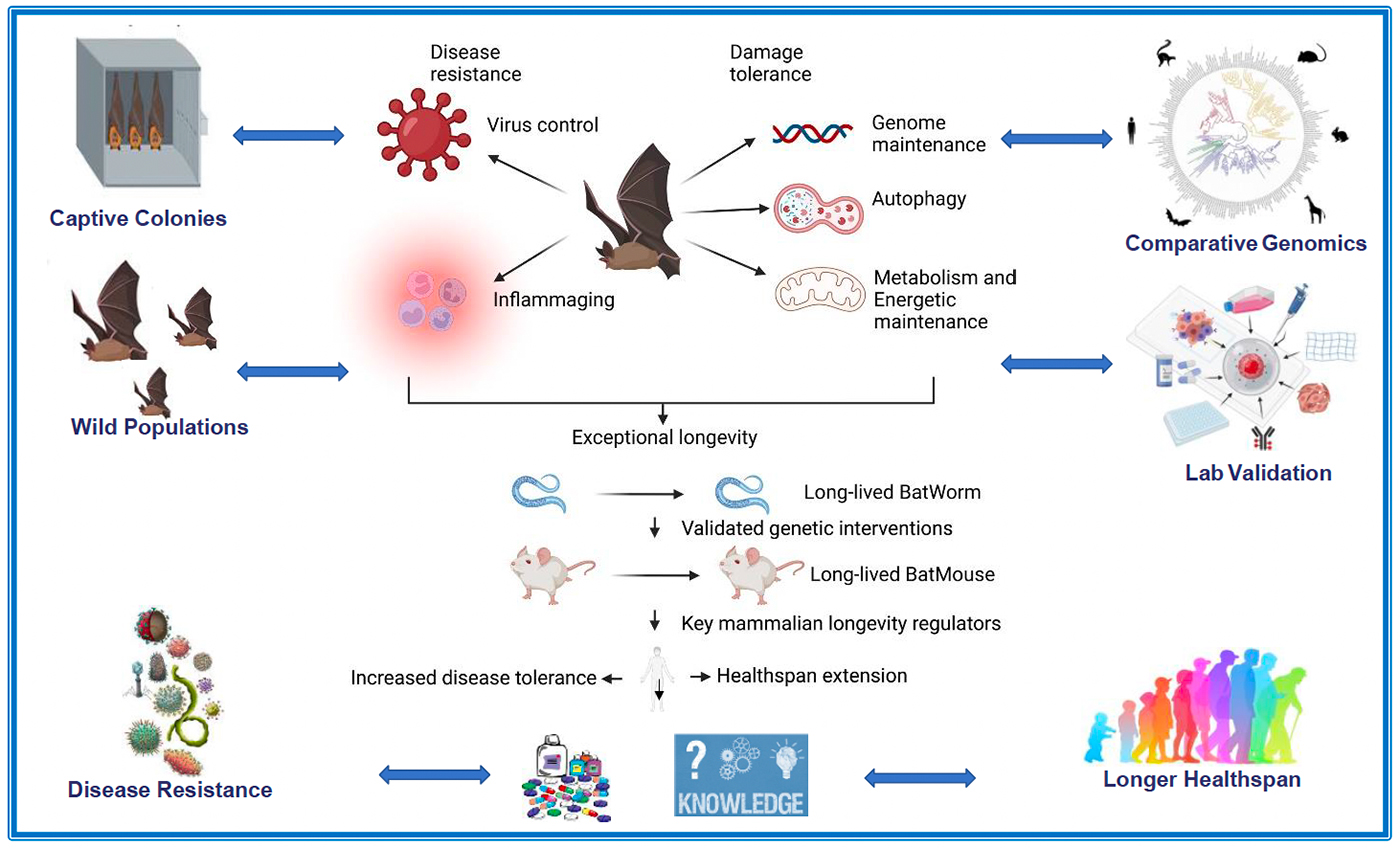
The goal of BatProtect is to achieve breakthroughs in our understanding of the molecular basis of bats’ extended healthspan and disease resistance to ultimately discover new directions to improve human healthspan and disease outcome.
BatProtect integrates a team of world-leading experts in bat biology, genomics, immunology and gerontology who will:
- 1elucidate the molecular mechanisms that bats use to slow down expected ageing;
- 2
identify the driving molecular mechanisms behind bats’ viral tolerance and limited age-related inflammation;
- 3
uncover the genomic basis and evolution of extended healthspan and disease tolerance in bats; and,
- 4
develop transgenic animal models to functionally validate the uncovered bat adaptations.
We will generate 150 reference quality bat genomes, the novel immunological, bioinformatic, cellular and molecular tools required to take an integrative multiomics approach and uncover the age and immune changes that occur in wild and captive bats across the ageing spectrum.
BatProtect will identify the top regulators of longevity and immunity, using deep neural networks analyses, to functionally validate in our cellular systems and novel transgenic animal models- BatWorms and BatMice. Ultimately, we will provide a deeper understanding of extended healthspan and disease resistance and will pave the way for future therapeutics.
Overall Impact:
BatProtect is a pioneering project that aims to provide new breakthroughs in bridging the gap between experimental animal models and human ageing. The conspicuous shortcoming of translatability of results on longevity and disease resistance derived from current laboratory models including mice, necessitates the establishment of long- lived mammalian models. Here, the bats as ‘superagers’ and disease resistant mammals, provide the single most suitable type of experimental system to fill the gap and promise to provide the crucial mechanisms that could be implemented for the extension of human healthspan.